| 1 | // SPDX-License-Identifier: GPL-2.0 |
|---|---|
| 2 | /* |
| 3 | * Minimal Linux kernel module example. |
| 4 | * |
| 5 | * This module creates /dev/hello_kmod. Reading from it returns a short |
| 6 | * message. It is intentionally small so the basic driver shape is visible. |
| 7 | */ |
| 8 | |
| 9 | #include <linux/device.h> |
| 10 | #include <linux/fs.h> |
| 11 | #include <linux/init.h> |
| 12 | #include <linux/module.h> |
| 13 | #include <linux/uaccess.h> |
| 14 | |
| 15 | #define DEVICE_NAME "hello_kmod" |
| 16 | #define CLASS_NAME "hello_class" |
| 17 | |
| 18 | static int major_number; |
| 19 | static struct class *hello_class; |
| 20 | static struct device *hello_device; |
| 21 | static const char message[] = "hello from a tiny kernel driver\n"; |
| 22 | |
| 23 | static int hello_open(struct inode *inode, struct file *file) |
| 24 | { |
| 25 | pr_info("hello_kmod: device opened\n"); |
| 26 | return 0; |
| 27 | } |
| 28 | |
| 29 | static int hello_release(struct inode *inode, struct file *file) |
| 30 | { |
| 31 | pr_info("hello_kmod: device closed\n"); |
| 32 | return 0; |
| 33 | } |
| 34 | |
| 35 | static ssize_t hello_read(struct file *file, char __user *buffer, |
| 36 | size_t length, loff_t *offset) |
| 37 | { |
| 38 | size_t message_len = sizeof(message) - 1; |
| 39 | size_t bytes_to_copy; |
| 40 | |
| 41 | if (*offset >= message_len) |
| 42 | return 0; |
| 43 | |
| 44 | bytes_to_copy = min(length, message_len - (size_t)*offset); |
| 45 | |
| 46 | if (copy_to_user(buffer, message + *offset, bytes_to_copy)) |
| 47 | return -EFAULT; |
| 48 | |
| 49 | *offset += bytes_to_copy; |
| 50 | return bytes_to_copy; |
| 51 | } |
| 52 | |
| 53 | static const struct file_operations hello_fops = { |
| 54 | .owner = THIS_MODULE, |
| 55 | .open = hello_open, |
| 56 | .read = hello_read, |
| 57 | .release = hello_release, |
| 58 | }; |
| 59 | |
| 60 | static int __init hello_init(void) |
| 61 | { |
| 62 | major_number = register_chrdev(0, DEVICE_NAME, &hello_fops); |
| 63 | if (major_number < 0) { |
| 64 | pr_err("hello_kmod: failed to register char device\n"); |
| 65 | return major_number; |
| 66 | } |
| 67 | |
| 68 | hello_class = class_create(CLASS_NAME); |
| 69 | if (IS_ERR(hello_class)) { |
| 70 | unregister_chrdev(major_number, DEVICE_NAME); |
| 71 | return PTR_ERR(hello_class); |
| 72 | } |
| 73 | |
| 74 | hello_device = device_create(hello_class, NULL, MKDEV(major_number, 0), |
| 75 | NULL, DEVICE_NAME); |
| 76 | if (IS_ERR(hello_device)) { |
| 77 | class_destroy(hello_class); |
| 78 | unregister_chrdev(major_number, DEVICE_NAME); |
| 79 | return PTR_ERR(hello_device); |
| 80 | } |
| 81 | |
| 82 | pr_info("hello_kmod: loaded as /dev/%s with major %d\n", |
| 83 | DEVICE_NAME, major_number); |
| 84 | return 0; |
| 85 | } |
| 86 | |
| 87 | static void __exit hello_exit(void) |
| 88 | { |
| 89 | device_destroy(hello_class, MKDEV(major_number, 0)); |
| 90 | class_destroy(hello_class); |
| 91 | unregister_chrdev(major_number, DEVICE_NAME); |
| 92 | pr_info("hello_kmod: unloaded\n"); |
| 93 | } |
| 94 | |
| 95 | module_init(hello_init); |
| 96 | module_exit(hello_exit); |
| 97 | |
| 98 | MODULE_LICENSE("GPL"); |
| 99 | MODULE_AUTHOR("Digital Rhyme Knowledge Base"); |
| 100 | MODULE_DESCRIPTION("Minimal Linux character device kernel module"); |
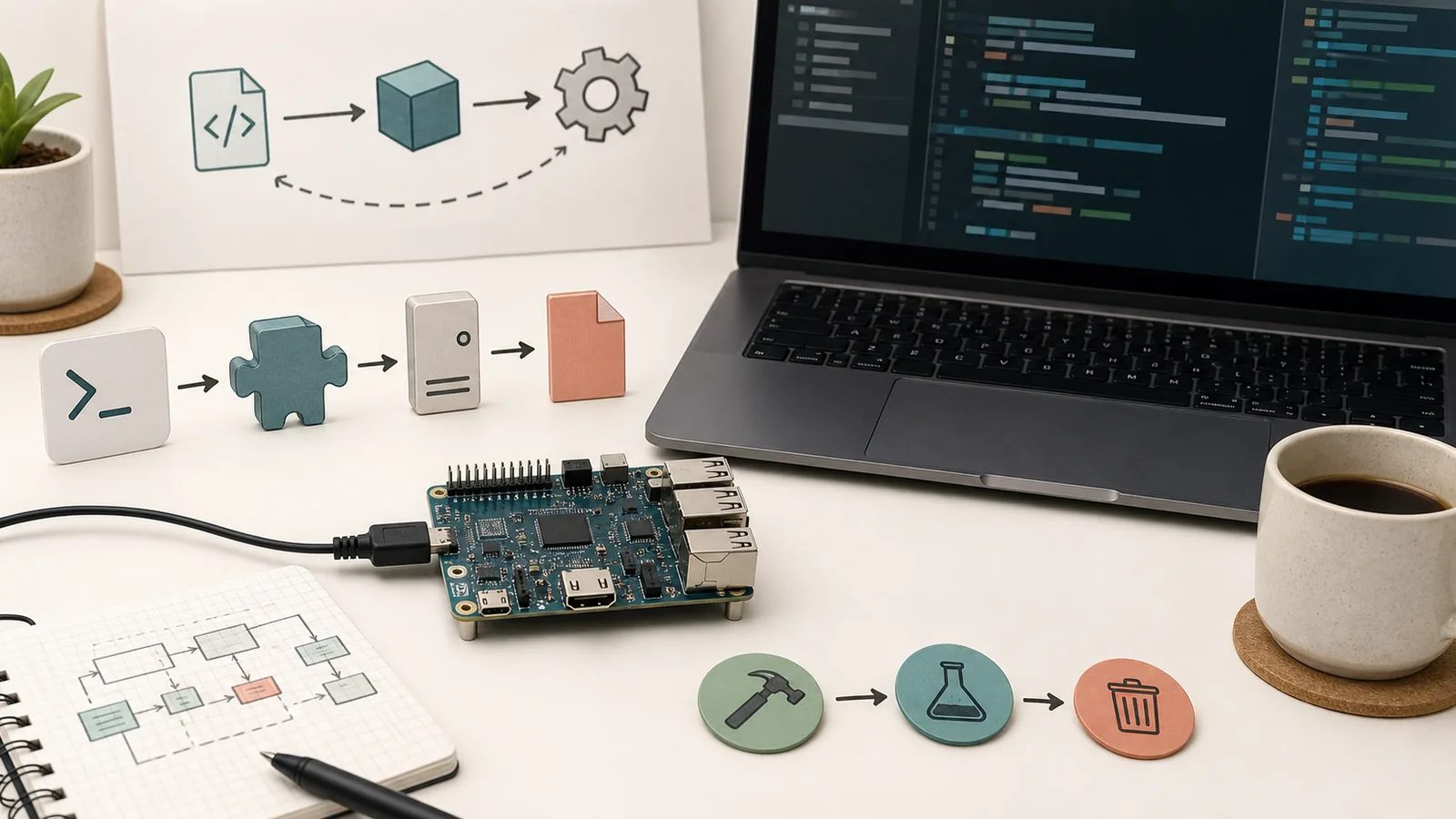
hello_kmod.c Source
A beginner character-device module with build, load, test, and unload flow.